Candidate 14440
Test
Velit Esse
Cillum
Dolor Sit
Amet
Dolor Sit
Amet
Dolor Sit
Amet
Dolor Sit
Amet

Wage Growth Is Stabilizing
Pay rates across Wisconsin’s major light industrial markets are holding near historic highs, even as the pace of wage growth slows.
Talent Competition Remains Strong
A limited labor supply, retirements, and continued demand are keeping competition high, particularly for skilled trades and technical roles.
Location Still Influences Pay
Roles without access to public transportation continue to command higher wages in Dane County and Milwaukee, while geographic pay differences are narrowing in some areas.
Location Still Influences Pay
Roles without access to public transportation continue to command higher wages in Dane County and Milwaukee, while geographic pay differences are narrowing in some areas.
Location Still Influences Pay
Roles without access to public transportation continue to command higher wages in Dane County and Milwaukee, while geographic pay differences are narrowing in some areas.
Recruiting for industrial and manufacturing roles in Wisconsin is being shaped by a unique combination of strong demand, limited talent supply, and rising skill requirements. Despite a slight cooling in overall hiring, manufacturers across the state continue to face persistent workforce shortages—especially for skilled trades and technical roles. Retirements and a shrinking labor pool are making competition for qualified candidates as intense as ever.
Wage growth has largely stabilized across major markets, signaling a shift to a more balanced labor environment.
Pay rates remain near historic highs despite slower increases.
Localized markets like Beaver Dam are seeing stronger wage growth due to talent competition.
Transportation access continues to influence pay, with higher wages required for less accessible roles.
Geographic pay differences are narrowing in some regions as competition increases.
Employers are relying more on total compensation and work environment as wage growth slows.
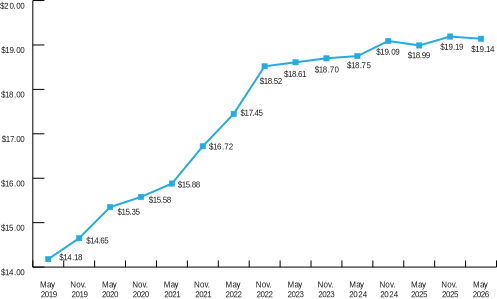
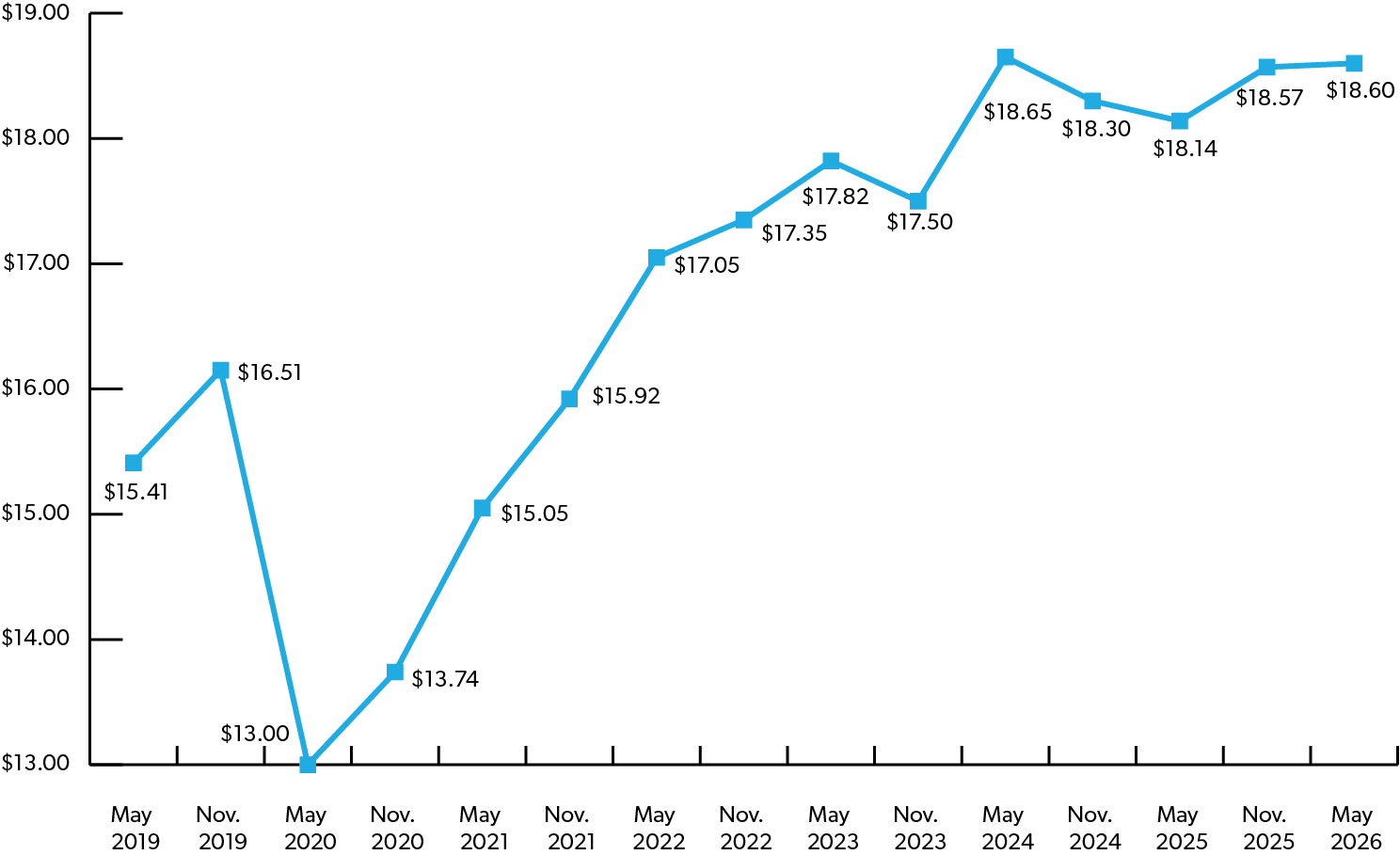
Over the past year, hourly pay rates for light industrial roles across Dane County, Beaver Dam, and Milwaukee show signs of stabilization following earlier periods of rapid growth. Dane County and Milwaukee both experienced only modest increases, indicating that wages are holding near peak levels as market conditions normalize. In contrast, Beaver Dam saw stronger wage growth, reflecting more localized competition for talent. Overall, the data suggests a more balanced labor market, where wage growth has slowed and employers are increasingly competing through factors beyond base pay.
| Average Hourly Pay Rates May 2026* | |||
|---|---|---|---|
| Beaver Dam, WI | $18.88 | $18.88 | $18.88 |
| Dane County, WI | $19.14 | $19.14 | $19.14 |
| Milwaukee, WI | $18.60 | $18.60 | $18.60 |
“In a tight labor market, competitive pay is only part of the equation. Employers also need to think about the full employee experience and what sets their organization apart.”
Sample quote attribution
QTI Workforce Expert
Competitive Pay
Pay remains an important part of attracting talent, even as wage growth begins to stabilize.
Location & Accessibility
Where a role is located and access to transportation can influence the compensation needed to attract workers.
Evolving Skills
As technology plays a larger role in manufacturing, specialized technical skills are becoming increasingly important.
Candidate 14440
Test
Velit Esse
Cillum
Dolor Sit
Amet
Dolor Sit
Amet
Dolor Sit
Amet
Dolor Sit
Amet
Location continues to influence pay rates across markets, though trends vary by region. In Dane County and Milwaukee, positions without access to public transportation still require higher wages to remain competitive, reinforcing transportation as a key factor in talent attraction. Meanwhile, in Beaver Dam, the wage gap between in-town and outlying roles has narrowed as employers within the city increase pay to compete for workers. Overall, location-based pay differences are becoming less pronounced in some areas, but accessibility—particularly transit—remains an important driver of compensation.
Localized markets like Beaver Dam are seeing stronger wage growth due to talent competition.
Transportation access continues to influence pay, with higher wages required for less accessible roles.
Localized markets like Beaver Dam are seeing stronger wage growth due to talent competition.
With higher wages required for less accessible roles.
With higher wages required for less accessible roles.
Localized markets like Beaver Dam are seeing stronger wage growth due to talent competition.
| On the Bus Line | Off the Bus Line | |
|---|---|---|
| Dane County, WI | $17.47 | $19.77 |
| Milwaukee, WI Area | $17.55 | $20.61 |
| Average Hourly Pay Rates May 2026* | |
|---|---|
| Beaver Dam, WI Area | $18.72 |
| Greater Beaver Dam, WI Area | $18.99 |
Partner with QTI to overcome today’s toughest HR challenges—from attracting top talent in a competitive market to designing fair and competitive compensation strategies. Whether you need staffing solutions, professional and executive recruiting, or compensation consulting, our team is ready to deliver tailored strategies that drive results. Connect with us today and discover how QTI can help your organization reach its full potential through people.

Location-Based Pay Trends
Location continues to influence pay rates across markets, though trends vary by region. In Dane County and Milwaukee, positions without access to public transportation still require higher wages to remain competitive, reinforcing transportation as a key factor in talent attraction. Meanwhile, in Beaver Dam, the wage gap between in-town and outlying roles has narrowed as employers within the city increase pay to compete for workers. Overall, location-based pay differences are becoming less pronounced in some areas, but accessibility—particularly transit—remains an important driver of compensation.
Wage Growth Is Stabilizing
Pay rates across Wisconsin’s major light industrial markets are holding near historic highs, even as the pace of wage growth slows.
Wage Growth Is Stabilizing
Pay rates across Wisconsin’s major light industrial markets are holding near historic highs, even as the pace of wage growth slows.
Partner with QTI to overcome today’s toughest HR challenges—from attracting top talent in a competitive market to designing fair and competitive compensation strategies. Whether you need staffing solutions, professional and executive recruiting, or compensation consulting, our team is ready to deliver tailored strategies that drive results. Connect with us today and discover how QTI can help your organization reach its full potential through people.