2027 HR Trends Survey Results: Key Insights for Employers
Download PDFThe Future of Work Is Here, and HR Is at the Center
From AI adoption and succession planning to leadership development and employee well-being, the priorities shaping 2027 reveal a workplace undergoing significant transformation.
Organizations may be experiencing greater turnover stability than in recent years, but that doesn't mean the pressure on HR has eased. Results from the 2027 HR Trends Survey show that talent attraction remains the top challenge for the sixth consecutive year, while concerns about leadership pipelines, workforce sustainability, burnout, and AI governance continue to grow.
Based on responses from 175 primarily Wisconsin-based organizations across a broad range of industries, this year's survey highlights emerging trends HR leaders should watch as they build workforce strategies for 2027.
For a deeper discussion of the findings, watch QTI's 2027 HR Outlook: Navigating What's Next webinar featuring HR and business leaders from across the region.
Key Findings at a Glance
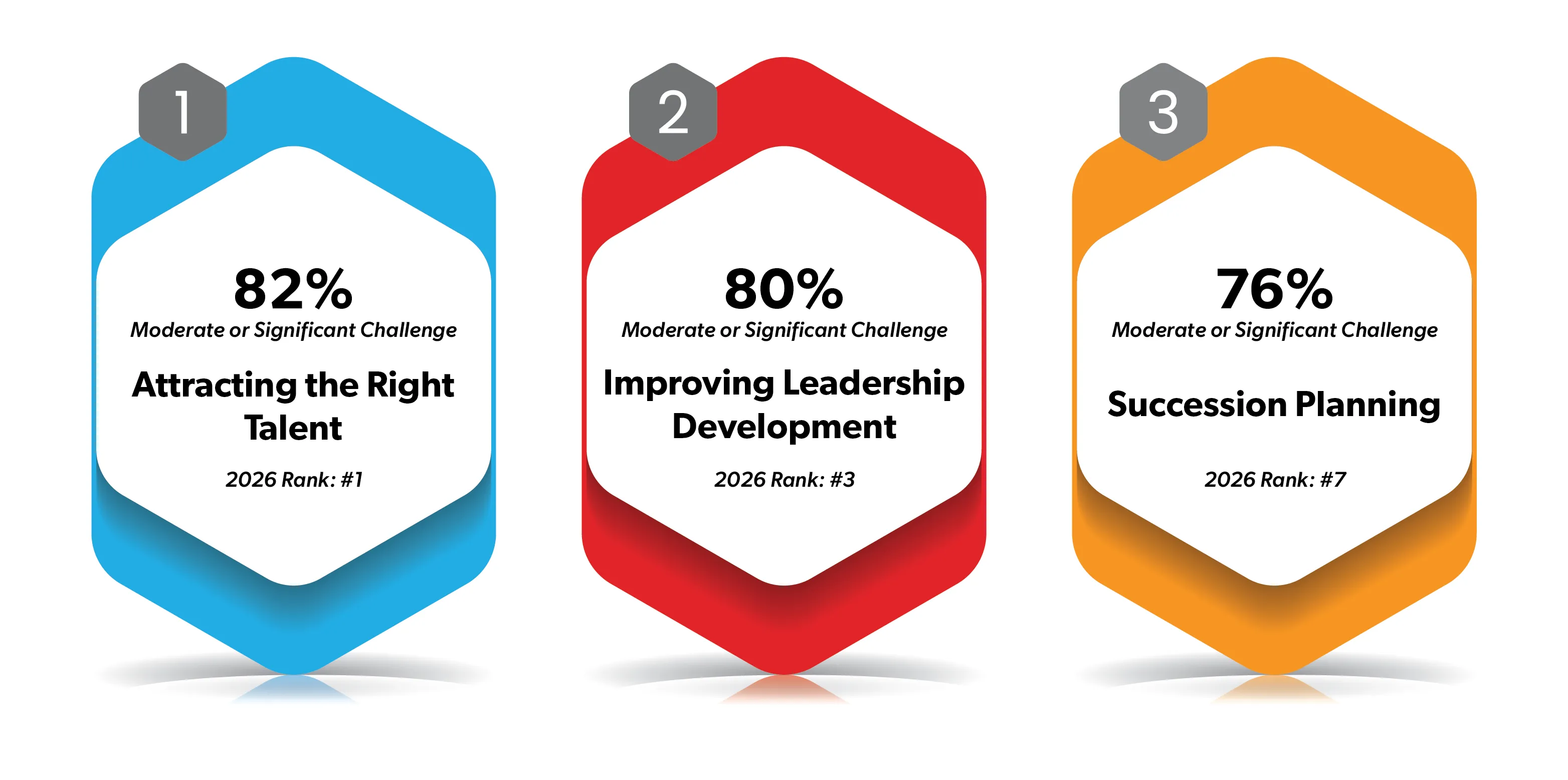
82% of organizations say attracting the right talent is a moderate or significant challenge.
76% identify succession planning as a moderate or significant challenge.
80% cite leadership development as a major concern.
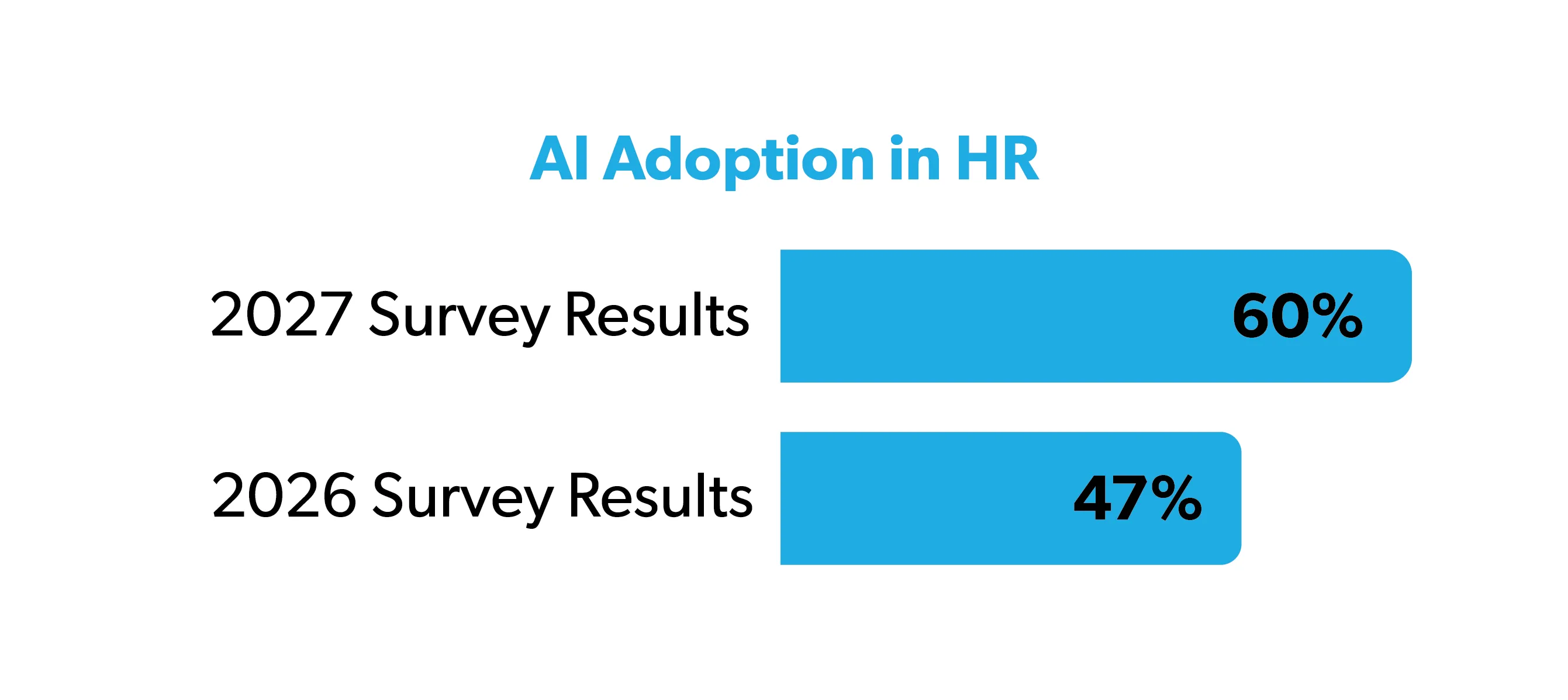
60% currently use AI or automation tools in HR.
58% report moderate or higher levels of employee burnout.
3.0% is the median planned base pay increase for 2027.
Taken together, these findings reveal a common theme: organizations are being asked to do more with the talent they already have while simultaneously preparing for rapid workplace change.
Top HR Challenges for 2027
HR Trend Number 1: Talent Attraction Remains the Top HR Challenge
Despite signs that turnover is stabilizing, recruiting continues to be difficult.
While only 12% of organizations report higher voluntary turnover than the previous year, attracting qualified candidates remains the number-one HR challenge for the sixth consecutive year. Eighty-two percent of respondents rate talent attraction as a moderate or significant challenge.
Several factors are driving this challenge:
Competitive labor markets
Skills shortages
An aging workforce
Evolving skill requirements fueled by technology and AI.
The survey also found that only 44% of organizations are satisfied with the quality of candidates they attract, while 60% identify market competition as one of their biggest recruiting obstacles.
Survey results identify another emerging reality: AI is accelerating recruiting activity on both sides of the hiring process. Candidates can generate resumes and submit applications faster, while employers can automate screening and scheduling. The result is often more applications, greater competition for attention, and increased difficulty identifying the best candidates.
What Employers Should Consider
Leading organizations are focusing on:
Strengthening their employer brand
Clearly communicating their employee value proposition (EVP)
Connecting employee work to organizational purpose
Investing in upskilling and internal career pathways
Recruiting for future-focused skills, not just current openings
An employee value proposition aligns an organization's goals, values, and benefit offerings with those of prospective employees.
HR Trend Number 2: Leadership Development Has Moved Into the Spotlight
Leadership development rose to the second-largest HR challenge in this year's survey, with 80% of respondents citing it as a significant concern.
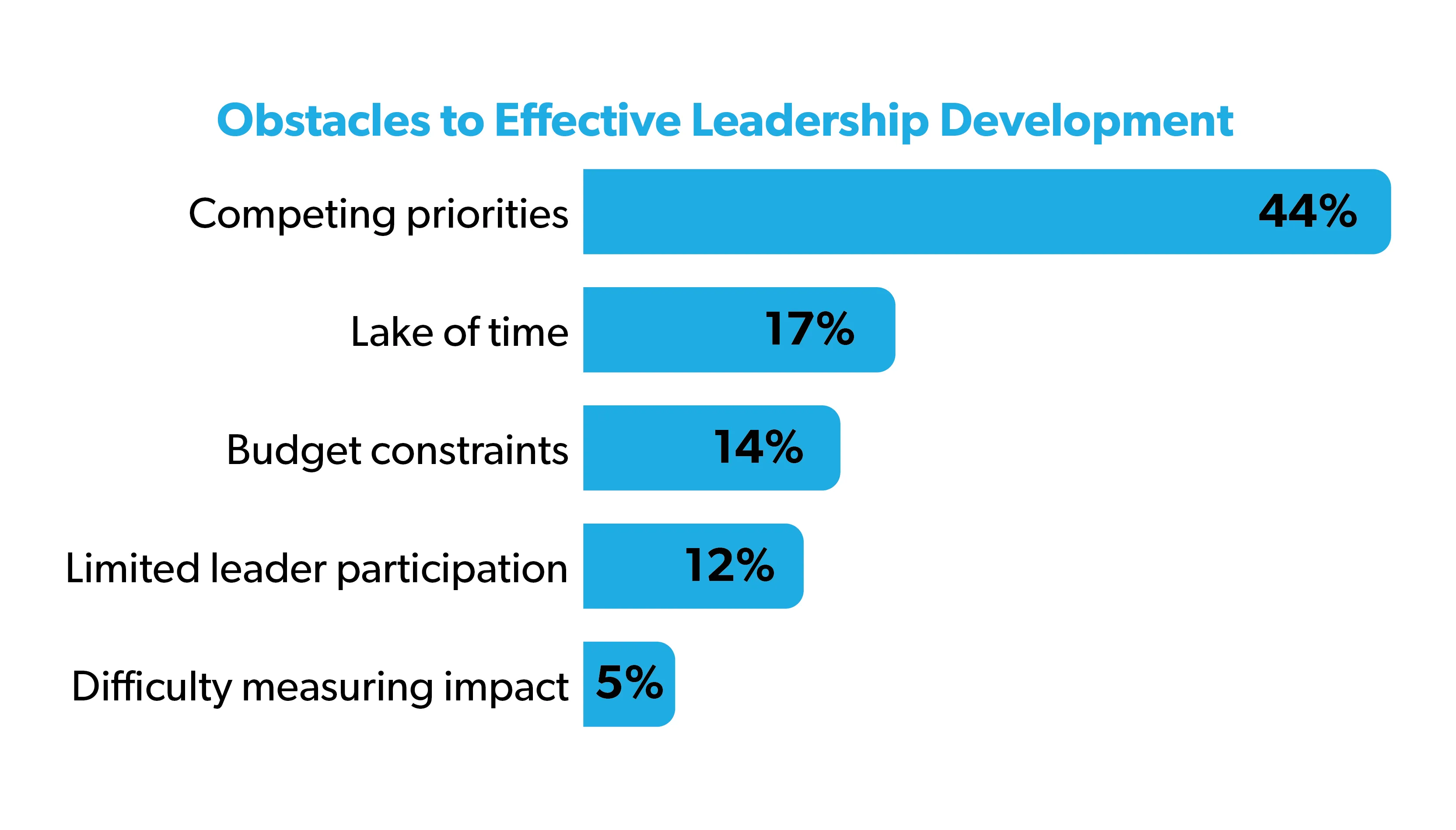
Organizations recognize the importance of strong leaders, but many struggle to create the time and space needed for development. The biggest obstacle identified by respondents was competing priorities (44%), followed by lack of time and budget constraints.
Today's managers are being are being asked to:
Lead change initiatives
Support employee well-being
Develop talent
Manage hybrid teams
Drive engagement
Navigate AI adoption
At the same time, people management, strategic thinking, and coaching are the leadership capabilities organizations most want to strengthen.
The Leadership Gap
One of the most significant findings is the disconnect between concern and action. While leadership development and succession planning rank among the largest challenges, relatively few organizations place them among their top priorities.
Organizations that invest in leadership today will likely be better positioned to address tomorrow's workforce challenges, including retention, engagement, organizational growth, and succession risk.
HR Trend Number 3: Succession Planning Is Rising Faster Than Any Other Workforce Challenge
Perhaps the most notable change in this year's survey is the dramatic increase in concern around succession planning.
The percentage of employers identifying succession planning as a moderate or significant challenge increased from 59% to 76% year over year. This represents one of the largest increases across all survey categories.
Yet despite widespread concern, only 28% of organizations rank succession planning among their top three HR priorities.
The survey suggests many employers recognize the risk but have not yet implemented the systems needed to address it:
Only 14% conduct skills gap analyses
Only 11% have internal mobility programs
Just 36% use skills-based advancement practices
As experienced employees retire and critical skills evolve, organizations will increasingly need structured succession planning processes that identify future leaders and develop talent pipelines well before vacancies occur.
Beyond the Top Three Challenges
AI Adoption Is Accelerating Across HR
Artificial intelligence has moved beyond experimentation.
Sixty percent of organizations now use AI or automation tools in HR, up from 47% last year. Additionally, 67% plan to expand their use of AI within the next 12 to 18 months.
Respondents reported several positive outcomes from AI implementation:
Increased efficiency
Faster access to information
Improved decision support
Reduced administrative work
At the same time, organizations continue to navigate challenges related to AI governance and workforce readiness.
Key findings include:
38% have formal AI governance policies, up from 17%
44% believe their HR teams are prepared to evaluate AI tools
73% cite data privacy and security as their top AI concern
Rather than focusing solely on technical AI expertise, organizations should build AI fluency across their workforce. As AI continues to evolve, employees will need the ability to understand, evaluate, and appropriately apply AI tools in their day-to-day work while adapting to new workflows and technologies.
Employee Wellbeing and Burnout Require Greater Attention
For the first time, the survey explored organizational burnout levels in more depth.
The results are difficult to ignore:
58% of organizations report moderate or higher employee burnout.
71% measure employee wellbeing in some way.
Only 14% train managers on employee well-being and mental health.
While employee assistance programs, flexible schedules, and mental health benefits remain common offerings, the findings suggest many organizations treat symptoms rather than address root causes.
Managers increasingly serve as the front line of employee experience, making leadership capability and wellbeing support closely connected challenges. Organizations that equip managers to recognize burnout, facilitate meaningful development conversations, and build healthy team cultures may have a competitive advantage in both retention and engagement.
Total Rewards Strategies Are Becoming More Strategic
Compensation remains important, but employers are taking a broader view of total rewards.
The survey found:
68% face increased demands for compensation and benefits.
The median planned pay increase for 2027 is 3.0%.
44% have a documented compensation philosophy, up from 30%.
39% say employees know their pay range, up from 32%.
Rather than relying solely on larger salary increases, many organizations are improving how they communicate value through total rewards statements, compensation philosophies, career growth opportunities, flexibility, and employee development programs.
As labor markets remain competitive, employees increasingly want transparency around compensation, advancement opportunities, and the overall employee experience. Organizations that can clearly articulate their total rewards strategy may be better positioned to attract and retain talent.
Total Rewards include financial rewards (the monetary compensation and benefits provided by an employer), non-financial rewards (recognition programs, perks, etc.), and intrinsic rewards (non-monetary rewards that come from within an individual).
Turning HR Trends into Action
The survey findings point to several workforce priorities that organizations should address as they prepare for 2027 and beyond.
Develop a succession planning strategy to ensure leadership continuity and reduce organizational risk.
Invest in manager and leadership development to build the skills needed to lead through change and support employee growth.
Strengthen AI governance and workforce readiness by establishing clear policies and building AI fluency across the organization.
Review compensation philosophy and total rewards programs to remain competitive and meet evolving employee expectations.
Build internal talent pipelines through upskilling and career development to reduce reliance on an increasingly competitive external labor market.
Organizations that focus on these five areas will be better positioned to navigate workforce challenges, strengthen resilience, and create sustainable growth in the years ahead.
Watch the Webinar and Explore the Results
The 2027 HR Trends Survey makes one thing clear: HR continues to play a central role in business strategy. Whether the challenge is attracting talent, developing leaders, planning for future workforce needs, implementing AI, or enhancing the employee experience, the organizations that invest proactively today will be better positioned for success tomorrow. To hear additional insights and practical recommendations from QTI's leadership team and HR panelists, watch the 2027 HR Outlook: Navigating What's Next webinar and explore how these trends can help shape your organization's priorities for the year ahead. Or contact the QTI team to learn more about putting these HR trends into action.